

 English
 русский
 Español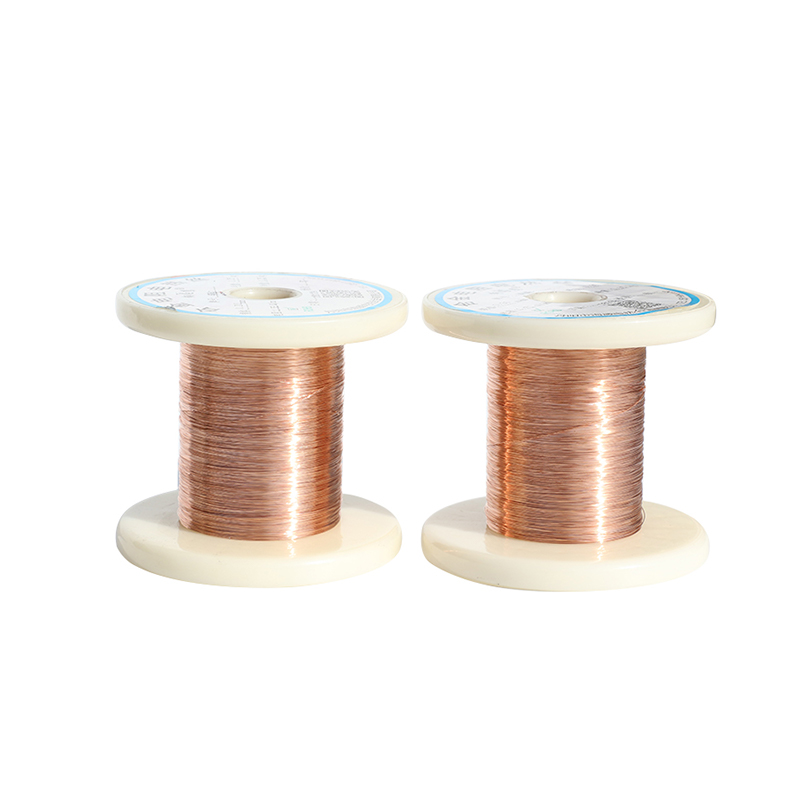

Welding Consumables Guide Everything you need to know about flux core welding wire, flux welders, MIG welding wire composition, ER5356 aluminum wire, spool sizes, storage, and sh...
READ MORECUNI1 Copper-Nickel Low-Resistance Alloy Wire Wholesale

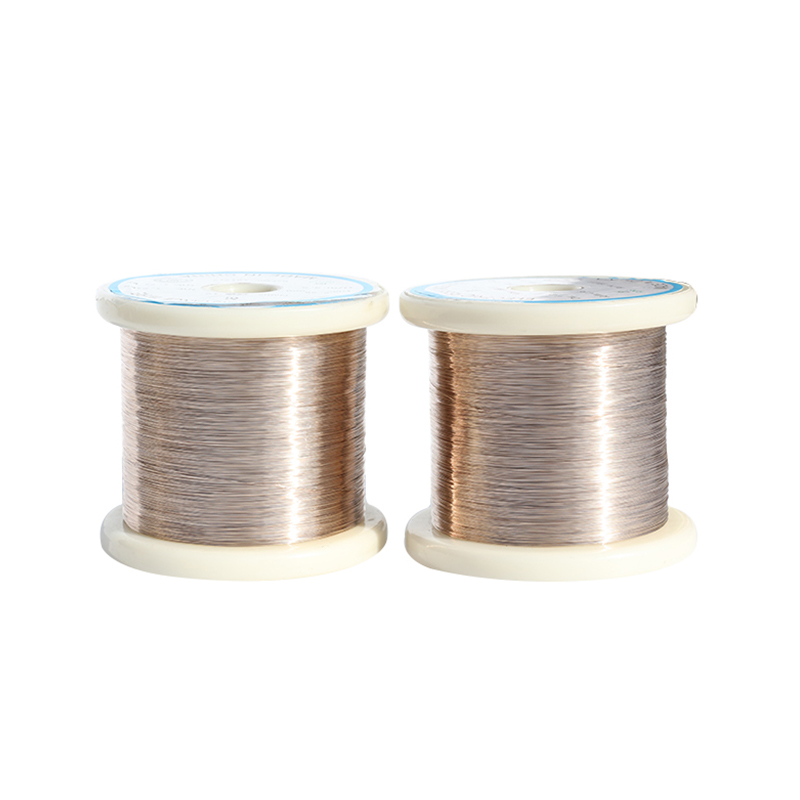
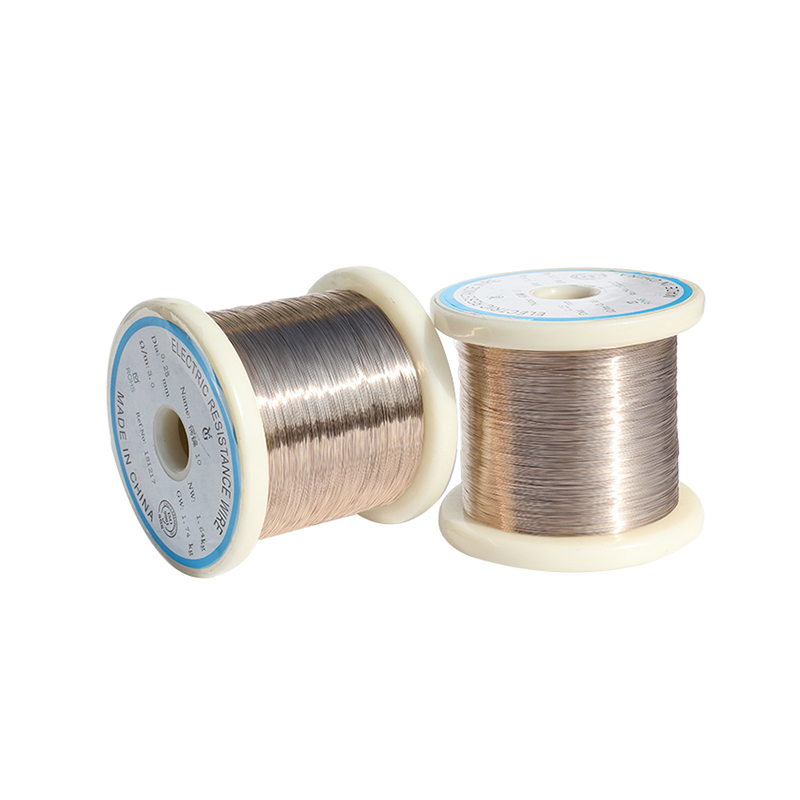
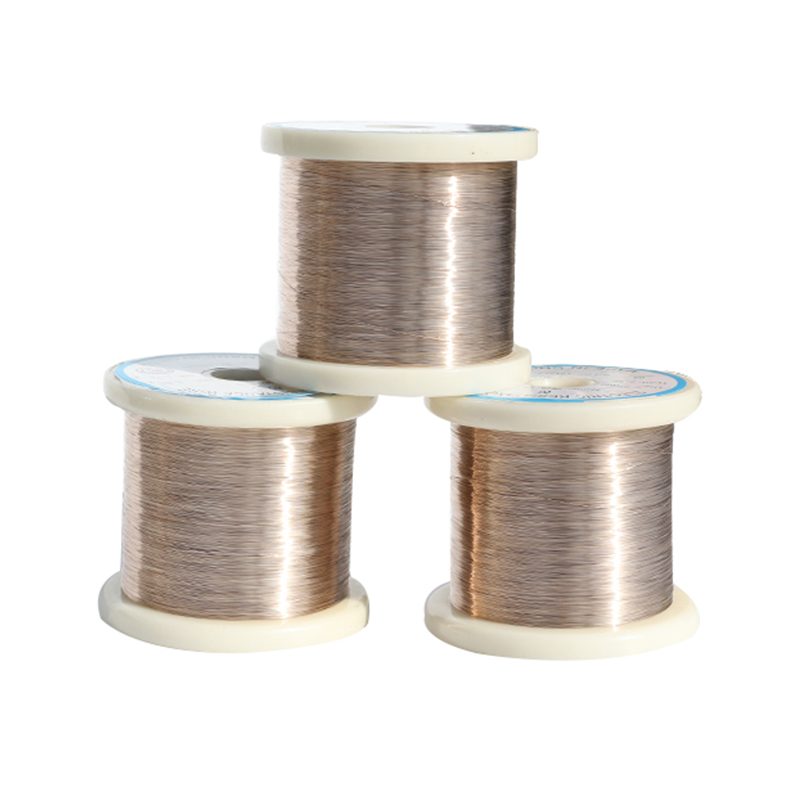
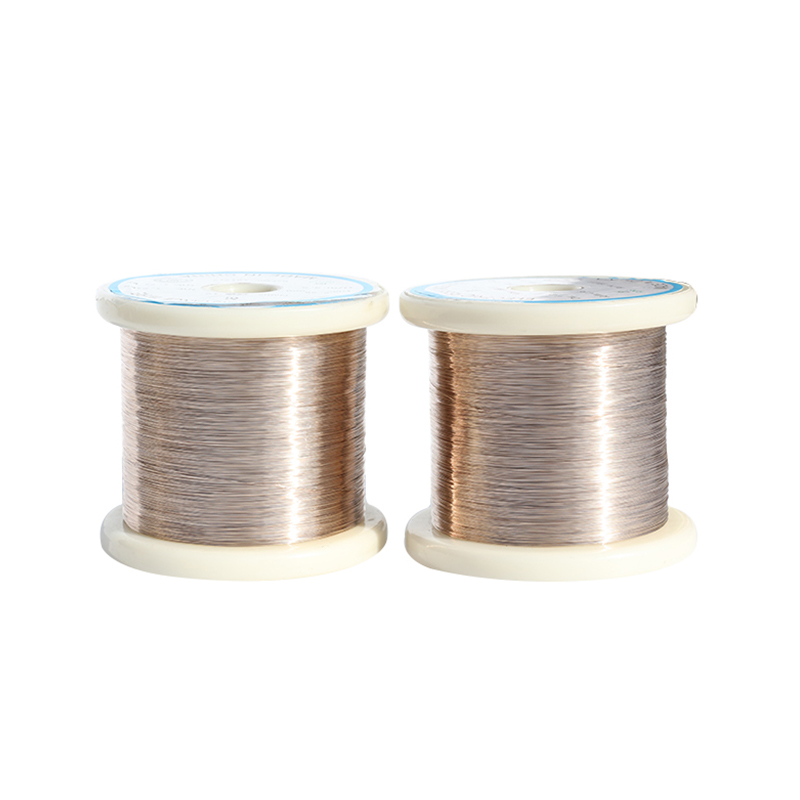
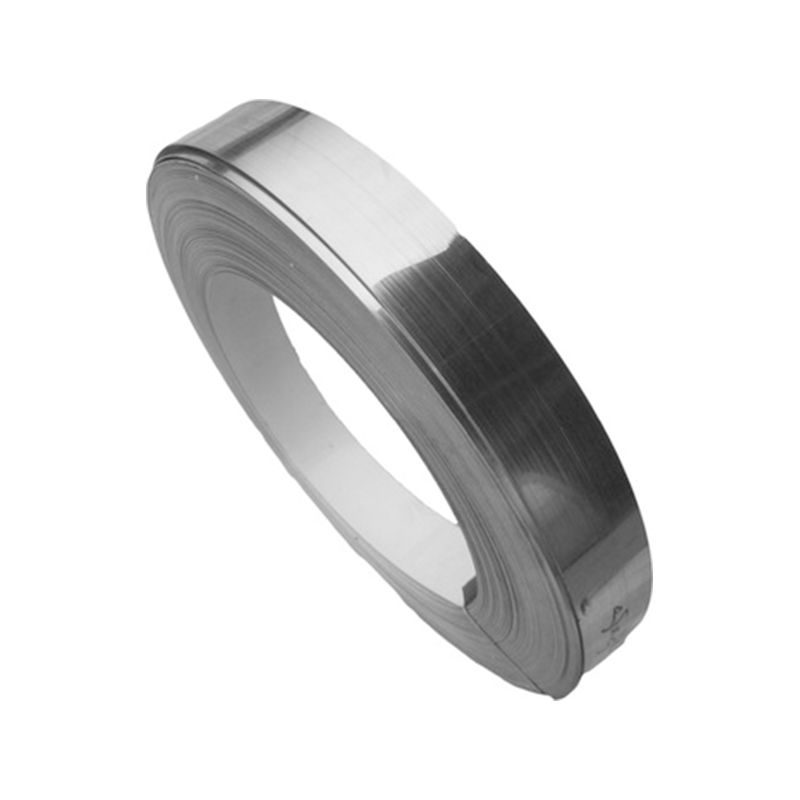
CUNI1 Copper-Nickel Low-Resistance Alloy Wire
CUNI1 copper-nickel low-resistance alloy wire is the preferred material for manufacturing milliohm-level resistors. It is commonly used for current sensing in automotive electronics and battery management systems (BMS), producing extremely low voltage drop and heat loss even under high current conditions. In applications where only a slight temperature increase is required (such as underfloor heating systems, defrosting devices, and medical heating blankets), CuNi1 wire can be used as a heating element to provide long-distance and uniform heat distribution without generating localized hot spots like high-resistance wires.
- Specification
- Contact Us
| Grade | CuNi1 | CuNi2 | CuNi6 | CuNi8 | CuMn3 | CuNi10 | CuNi14 | CuNi19 | CuNi23 | CuNi30 | CuNi34 | CuNi44 | |
| NC003 | NC005 | NC010 | NC012 | MC012 | NC015 | NC020 | NC025 | NC030 | NC035 | NC040 | NC050 | ||
| Composition (%) | Cu | Bal | Bal | Bal | Bal | Bal | Bal | Bal | Bal | Bal | Bal | Bal | Bal |
| Mn | — | — | — | — | 3 | — | 0.3 | 0 | 0.5 | 1 | 1 | 1 | |
| Ni | 1 | 2 | 6 | 8 | 10 | 14.2 | 19 | 23 | 30 | 34 | 44 | ||
| Max operating temperature (℃) | 200 | 200 | 220 | 250 | 200 | 250 | 300 | 300 | 300 | 350 | 350 | 400 | |
| Resistivity (μΩ·m @20℃) | 0.03±10% | 0.06±10% | 0.1±10% | 0.12±10% | 0.12±10% | 0.15±10% | 0.2±5% | 0.25±5% | 0.35±5% | 0.35±5% | 0.4±5% | 0.49±5% | |
| Temperature coefficient of resistance (×10⁻⁶/℃) | <100 | <120 | <60 | ≈57 | <38 | <50 | <38 | <25 | <16 | <10 | 0 | < -8 | |
| Thermoelectric voltage vs Copper (μV/K @20℃) | -8 | -12 | -18 | -22 | 1 | -25 | -28 | -32 | -34 | -37 | -39 | -43 | |
| Mean thermal expansion coefficient (×10⁻⁶/℃) | 17.5 | 17.5 | 17.5 | 17.5 | 18 | 17.5 | 17.5 | 17.5 | 17.5 | 17 | 16 | 15 | |
| Thermal conductivity (W/mK) | 145 | 130 | 92 | 75 | 84 | 59 | 48 | 38 | 33 | 27 | 25 | 23 | |
| Specific heat capacity at 20℃ (J/gK) | 0.38 | 0.38 | 0.38 | 0.38 | 0.39 | 0.38 | 0.38 | 0.38 | 0.38 | 0.39 | 0.4 | 0.41 | |
| Density (g/cm³) | 8.9 | 8.9 | 8.9 | 8.9 | 8.8 | 8.9 | 8.9 | 8.9 | 8.9 | 8.9 | 8.9 | 8.9 | |
| Melting temperature (℃) | 1085 | 1090 | 1095 | 1097 | 1050 | 1100 | 1115 | 1135 | 1150 | 1170 | 1180 | 1280 | |
| Min tensile strength (N/mm²) | 210 | 220 | 250 | 270 | 290 | 290 | 310 | 340 | 350 | 400 | 400 | 420 | |
| Elongation (%) | 25 | 25 | 25 | 25 | 25 | 25 | 25 | 25 | 25 | 25 | 25 | 25 | |
About Us
Danyang Haiwei Electrothermal Alloy Co., Ltd.
Danyang Haiwei Electrothermal Alloy Co., Ltd. is located in Lvcheng Town, Danyang City, Jiangsu Province, China. The company was established in 2010 based on the original company "Danyang Huakang Electric Heating Alloy Co., Ltd." and has been in operation for over 40 years. Since its expansion, the company's total area has reached 30,000 square meters. As a famous China CUNI1 Copper-Nickel Low-Resistance Alloy Wire Manufacturers and CUNI1 Copper-Nickel Low-Resistance Alloy Wire Factory, the company has production lines for a series of products including FeCrAl, Kanthal, CuNi, NiCr, CuMn, Kangtong, Monel, Incoloy, Hastelloy, etc. We have equipped with advanced equipment and processes, capable of providing a complete product range from raw material melting, steel rolling, stretching, heat treatment to finished products and packaging. Standardization work and strict inspections run through every stage of the product. As Haiven people, we have always adhered to the goal of "building a first-class brand and a first-class enterprise". We uphold the spirit of "quality first, reputation foremost", providing customers with the highest quality products and competitive prices. Welcome new and old customers at home and abroad to visit and patronize. Let us achieve long-term win-win cooperation.
News
-
-
Welding Wire Guide A practical, spec-driven comparison of MIG welding wire and flux-core welding wire, covering material choice, wire diameter, welding cable setup, and when ea...
READ MORE -
90/10 vs 70/30 Copper-Nickel: The Direct Answer Choose 90/10 copper-nickel for general seawater piping, condenser tubing, and budget-sensitive marine projects with moderate flow r...
READ MORE -
Monel alloy is a family of nickel-copper alloys, typically containing 63–70% nickel and 28–34% copper, prized for outstanding corrosion resistance, high strength, and excellent pe...
READ MORE -
The monel composition is primarily a nickel-copper alloy, typically consisting of approximately 63-70% nickel and 28-34% copper, with small additions of iron, manganese, carbon, a...
READ MORE
Copyright © Danyang Haiwei Electrothermal Alloy Co., Ltd. All Rights Reserved
 Wholesale CUNI1 Copper-Nickel Low-Resistance Alloy Wire Factory