

 English
 русский
 Español

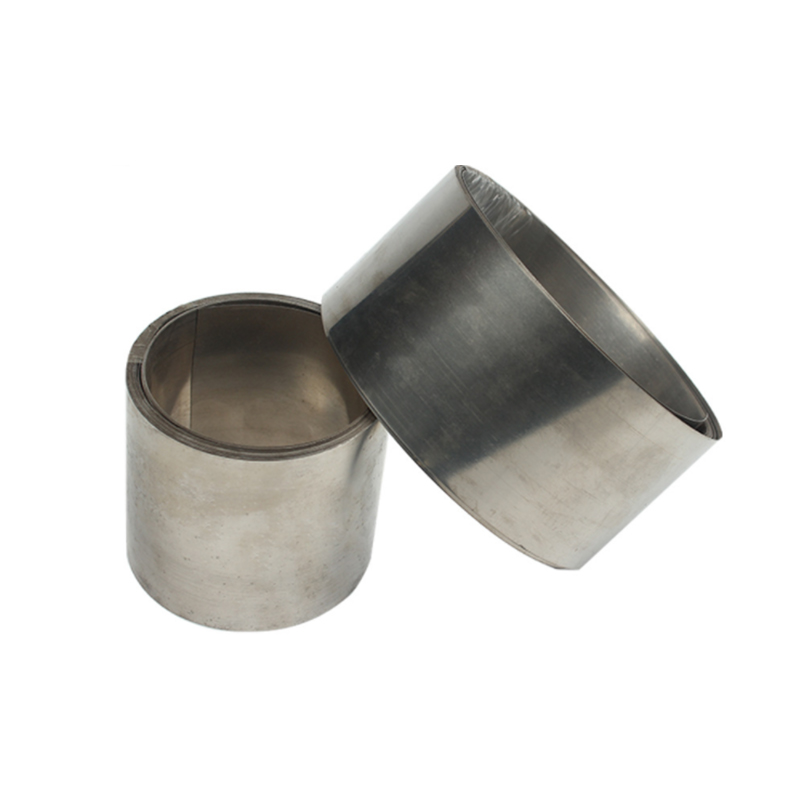
The monel composition is primarily a nickel-copper alloy, typically consisting of approximately 63-70% nickel and 28-34% copper, with small additions of iron, manganese, carbon, and silicon. This uni...
READ MORENews
Home / News / Industry News / What Is Monel Composition? A Complete Breakdown of Its Alloy Elements and Properties

What Is Monel Composition? A Complete Breakdown of Its Alloy Elements and Properties
Date:Jun 15, 2026
The monel composition is primarily a nickel-copper alloy, typically consisting of approximately 63-70% nickel and 28-34% copper, with small additions of iron, manganese, carbon, and silicon. This unique blend gives Monel alloys their renowned corrosion resistance, mechanical strength, and versatility across marine, chemical processing, and aerospace industries. Among the various grades, Monel Alloy 400 is the most widely used and serves as the benchmark for understanding what Monel metal is made of.
In this article, we will break down the precise chemical composition of Monel alloys, explore whether Monel is magnetic, compare Monel metal vs stainless steel, and examine practical applications such as Monel forging and Monel 400 springs. Whether you're an engineer, procurement specialist, or simply curious about this remarkable alloy, this guide provides the detailed information you need.
What Is Monel Made Of? The Core Elemental Breakdown
When people ask "what is Monel made of," the answer centers on a nickel-copper solid solution alloy. Unlike many alloys where elements form distinct phases, Monel's nickel and copper atoms blend together at the atomic level, creating a single-phase structure. This is fundamentally different from how stainless steel is constructed, where chromium forms a protective oxide layer over an iron matrix.
The composition of Monel varies slightly depending on the specific grade, but the foundational elements remain consistent. Below is a detailed table showing the typical elemental makeup of standard Monel Alloy 400:
| Element | Percentage Range | Function in Alloy |
|---|---|---|
| Nickel (Ni) | 63.0 - 70.0% | Primary base, provides corrosion resistance |
| Copper (Cu) | 28.0 - 34.0% | Enhances resistance to acids and seawater |
| Iron (Fe) | Max 2.5% | Adds strength and structural integrity |
| Manganese (Mn) | Max 2.0% | Improves hot workability |
| Carbon (C) | Max 0.3% | Influences hardness and machinability |
| Silicon (Si) | Max 0.5% | Aids in deoxidation during production |
| Sulfur (S) | Max 0.024% | Trace impurity, kept minimal |
This combination of elements is not arbitrary. The high nickel content—often around 67% in commercial Monel 400—is what gives the alloy its exceptional resistance to reducing acids like hydrochloric and sulfuric acid. Meanwhile, the substantial copper content sets Monel apart from pure nickel alloys, providing additional resistance to seawater and hydrofluoric acid environments that would degrade other materials rapidly.
Monel Alloy 400: The Industry Standard Grade
Monel Alloy 400 (often written as Alloy 400 Monel, or simply Monel 400) represents the original and most commercially significant member of the Monel family. Developed and trademarked by International Nickel Company (INCO) in the early 20th century, this alloy has remained largely unchanged in formulation because its properties have proven so effective across decades of industrial use.
Why Monel 400 Material Stands Out
The Monel 400 material is prized for several reasons that directly trace back to its composition:
- Exceptional resistance to chloride-ion stress corrosion cracking, making it ideal for marine environments
- Excellent mechanical properties across a wide temperature range, from cryogenic to approximately 1000°F (538°C)
- Good weldability using standard techniques, including TIG and MIG welding
- High resistance to oxidizing and reducing environments alike, a rare combination
- Retains ductility and toughness even after exposure to extreme cold
Mechanical Properties of Monel 400
In its annealed condition, Monel Alloy 400 typically exhibits a tensile strength of approximately 70,000 to 85,000 psi, with a yield strength around 28,000 to 40,000 psi. The hardness generally falls in the range of 110 to 150 on the Brinell scale. These figures can shift considerably depending on whether the material has undergone cold working or specific heat treatments, which is particularly relevant when discussing applications like Monel 400 springs.
It's worth noting that while "K Monel" is sometimes used informally, the correct designation is Monel K-500, which is a precipitation-hardenable variant of Alloy 400 with added aluminum and titanium. This grade can achieve significantly higher strength—up to 130,000 psi tensile strength after aging—while retaining the corrosion resistance characteristic of the base Monel composition.
Is Monel Magnetic? Understanding the Magnetic Properties
A frequently asked question is "is Monel magnetic?" The answer depends on the specific alloy grade and its metallurgical condition, but generally speaking, standard Monel 400 is non-magnetic to weakly magnetic at room temperature.
This characteristic stems directly from the alloy's composition. Pure nickel is ferromagnetic, but when combined with copper in the proportions found in Monel (roughly 67% nickel to 30% copper), the resulting alloy's Curie temperature drops below room temperature for most practical purposes. This means Monel 400 typically exhibits minimal magnetic response in everyday conditions.
Factors That Affect Magnetism in Monel
Several factors can influence the magnetic behavior of Monel alloys:
- Cold working: Significant cold working can induce a slight magnetic response in otherwise non-magnetic Monel due to strain-induced phase changes
- Temperature: At sufficiently low temperatures, even standard Monel 400 can become measurably magnetic as it approaches its Curie point
- Alloy grade: K-500 and other variants with different elemental ratios may exhibit different magnetic thresholds
- Manufacturing process: The specific heat treatment and forming history can alter magnetic permeability slightly
For most engineering applications, Monel is treated as a non-magnetic material, which makes it valuable for instruments, compass housings, and equipment used near sensitive magnetic sensors. However, for applications requiring absolute certainty about magnetic permeability—such as in MRI-adjacent equipment or precision navigation instruments—testing the specific batch is recommended rather than relying solely on the general classification.
Monel Metal vs Stainless Steel: A Comparative Analysis
One of the most common comparisons engineers and procurement teams make is Monel metal vs stainless steel. While both materials offer corrosion resistance, the underlying compositions and resulting performance characteristics differ substantially.
Stainless steel relies primarily on an iron base with chromium content of at least 10.5% to form a passive chromium oxide layer. Monel, in contrast, uses a nickel-copper base without relying on chromium at all. This fundamental difference in monel metal composition versus stainless steel composition leads to several practical distinctions, summarized in the table below.
| Property | Monel 400 | 316 Stainless Steel |
|---|---|---|
| Primary Base Elements | Nickel-Copper | Iron-Chromium-Nickel |
| Seawater Resistance | Excellent | Good but susceptible to pitting |
| Resistance to Hydrofluoric Acid | Excellent | Poor |
| Approximate Cost | Significantly higher | Moderate |
| Magnetic Behavior | Non-magnetic to weakly magnetic | Non-magnetic (austenitic) |
| Weldability | Good with matching filler | Excellent |
The decision between Monel vs stainless steel often comes down to the specific chemical environment. In applications involving hydrofluoric acid, seawater at high velocities, or strong reducing acids, Monel's composition provides a clear performance advantage that justifies its higher cost. For general-purpose applications where chromium-based passivation is sufficient, stainless steel remains the more economical choice.
Monel Forging and Manufacturing Considerations
Monel forging is a critical manufacturing process used to produce high-integrity components such as valve bodies, flanges, fittings, and fasteners for demanding environments. Because of its specific composition, Monel behaves differently during forging compared to carbon steel or even stainless steel.
Forging Temperature Ranges
Monel alloys are typically forged within a temperature range of approximately 1600°F to 2150°F (870°C to 1175°C). Working outside this range can lead to issues such as hot shortness, where the material becomes brittle at elevated temperatures due to sulfur contamination. This is precisely why monel composition specifications strictly limit sulfur content to a maximum of 0.024%—even minor sulfur contamination can cause severe cracking during the forging process.
Common Forged Monel Products
The high nickel and copper content that defines Monel metal alloy makes forged components particularly suitable for:
- Marine propeller shafts and fasteners exposed to constant seawater contact
- Valve components for chemical processing equipment handling hydrofluoric acid
- Pump shafts and impellers in offshore oil and gas applications
- Heat exchanger components requiring both thermal stability and corrosion resistance
Post-forging heat treatment is also important. Annealing at temperatures around 1600°F followed by controlled cooling helps relieve residual stresses introduced during the forging process, ensuring the final component meets the mechanical property requirements specified for critical applications.
Monel 400 Springs: Application of Composition in Specialized Components
Monel 400 springs represent one of the more specialized applications where the alloy's composition directly translates into functional advantages. Springs made from Monel are used in environments where conventional spring steels would corrode rapidly, particularly in marine, chemical, and oil field equipment.
Why Composition Matters for Spring Applications
Springs require materials that can withstand repeated cyclic loading without fatigue failure while resisting environmental degradation. The nickel-copper matrix of Monel provides good fatigue resistance, and when cold-drawn to spring quality wire, Monel 400 can achieve tensile strengths exceeding 140,000 psi—substantially higher than its annealed state values.
However, it's worth noting that for applications demanding the highest spring performance, Monel K-500 is often preferred over standard Alloy 400 due to its age-hardening capability, which provides superior spring characteristics including better set resistance under load.
Typical Applications for Monel Springs
Monel springs find use in:
- Subsea valve actuators and control systems
- Marine instrumentation requiring corrosion-resistant, non-magnetic components
- Chemical dosing equipment exposed to acidic environments
- Pressure relief devices in offshore oil and gas systems
Comparing Different Monel Alloy Grades
While Monel 400 is the most well-known, the broader family of Monel alloys includes several grades engineered for specific performance characteristics. Understanding how these grades differ in composition helps clarify why certain variants—sometimes informally referred to as "K Monel" or other shorthand terms—are selected for particular applications.
| Alloy Grade | Key Compositional Difference | Primary Advantage |
|---|---|---|
| Monel 400 | ~67% Ni, ~30% Cu base | Versatile general corrosion resistance |
| Monel K-500 | Adds Al and Ti for age-hardening | Higher strength while retaining corrosion resistance |
| Monel R-405 | Controlled sulfur for free-machining | Improved machinability for precision parts |
This variety within the Monel alloy family demonstrates how relatively small adjustments to the base nickel-copper composition can significantly alter the material's behavior, allowing engineers to select the precise grade suited to their application's mechanical and environmental demands.
Frequently Asked Questions About Monel Composition
What percentage of nickel is in Monel?
Standard Monel 400 contains between 63% and 70% nickel, with the remainder primarily made up of copper along with small amounts of iron, manganese, carbon, and silicon.
Does Monel rust like regular steel?
No. Due to its nickel-copper composition, Monel does not rust in the way carbon steel does. Its resistance to oxidation in most environments is one of the primary reasons it remains a preferred choice despite its higher cost compared to standard steels.
Can Monel be welded easily?
Yes, Monel alloys generally exhibit good weldability when using compatible filler materials and appropriate techniques such as gas tungsten arc welding (GTAW). Proper joint preparation and cleanliness are important due to the alloy's sensitivity to contamination during the welding process.
Conclusion: Why Monel Composition Matters
Understanding the composition of Monel provides crucial insight into why this alloy continues to be selected for some of the most demanding industrial applications worldwide. The carefully balanced nickel-copper base, supplemented by controlled amounts of iron, manganese, and other elements, creates a material that bridges the gap between standard stainless steels and more exotic, expensive alloys.
From Monel 400 serving as the workhorse grade across marine and chemical industries, to specialized variants enabling applications like high-performance springs and precision-machined components, the composition directly dictates performance. Whether you're evaluating Monel vs stainless steel for a specific project or sourcing material for Monel forging operations, a clear understanding of what's inside this alloy—and why each element matters—will help guide better material selection decisions for your application.
Recommended Articles
Content
- 1 What Is Monel Made Of? The Core Elemental Breakdown
- 2 Monel Alloy 400: The Industry Standard Grade
- 3 Is Monel Magnetic? Understanding the Magnetic Properties
- 4 Monel Metal vs Stainless Steel: A Comparative Analysis
- 5 Monel Forging and Manufacturing Considerations
- 6 Monel 400 Springs: Application of Composition in Specialized Components
- 7 Comparing Different Monel Alloy Grades
- 8 Frequently Asked Questions About Monel Composition
- 9 Conclusion: Why Monel Composition Matters
News
-
-
What Is Monel Metal? The Direct Answer Monel metal is a group of nickel-copper alloys containing approximately 63–70% nickel and 27–34% copper, with minor additions of iron, manganese, carbon, and si...
READ MORE -
The Bottom Line: Which Should You Choose? Choose Monel when your environment involves seawater, hydrofluoric acid, or highly reducing conditions. Choose stainless steel when oxidizing environments, ...
READ MORE
Copyright © Danyang Haiwei Electrothermal Alloy Co., Ltd. All Rights Reserved
 OEM/ODM Nickel Based High-Temperature Alloy Manufacturers