

 English
 русский
 Español
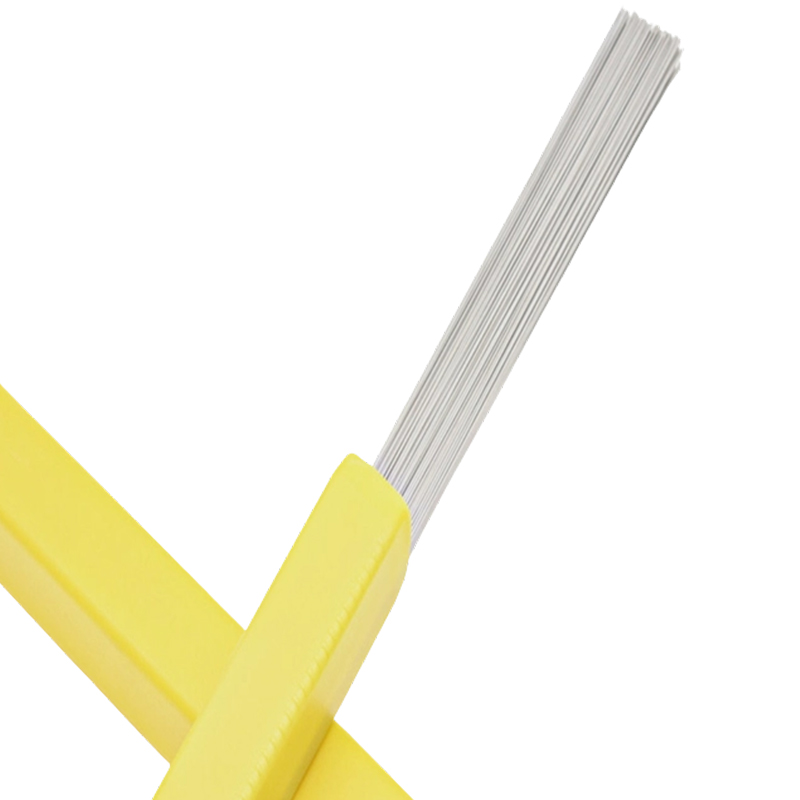

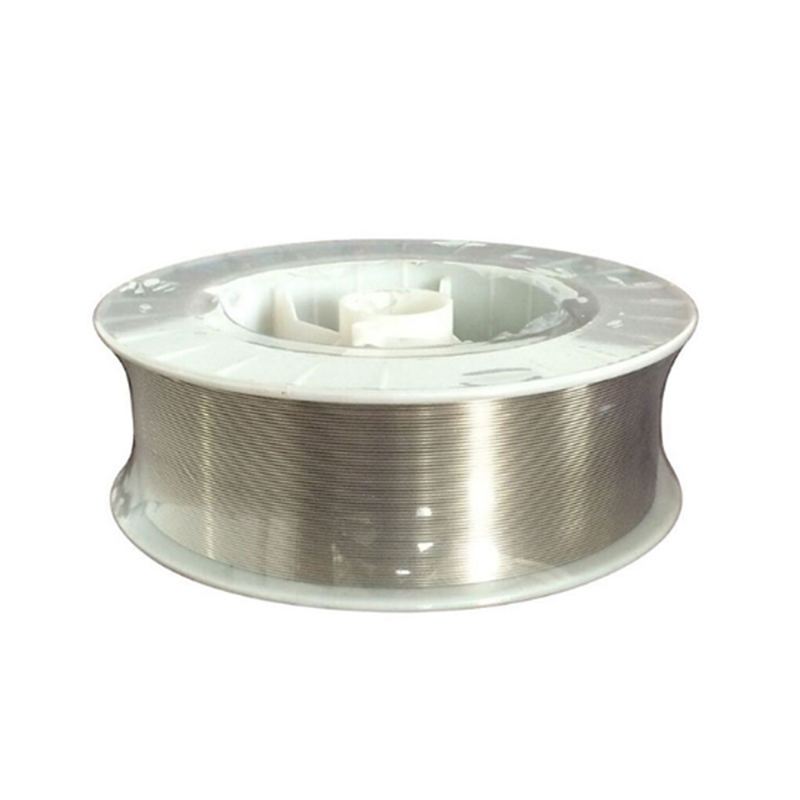
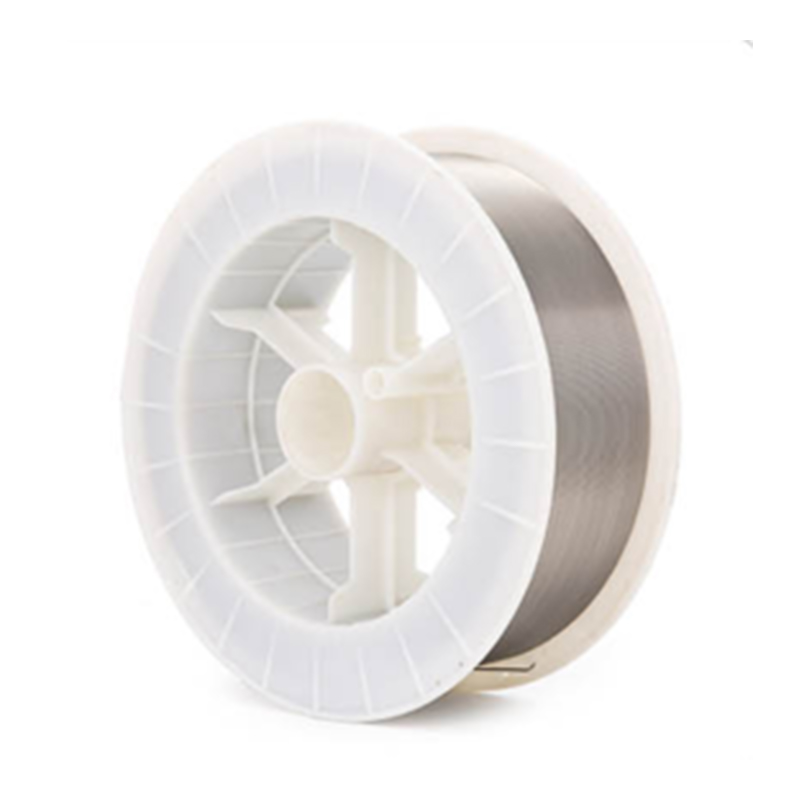


Welding Consumables Guide Everything you need to know about flux core welding wire, flux welders, MIG welding wire composition, ER5356 aluminum wire, spool sizes, storage, and shelf life. Flux co...
READ MOREWhat is flux core welding wire?
Date:Jul 13, 2026
Welding Consumables Guide
Everything you need to know about flux core welding wire, flux welders, MIG welding wire composition, ER5356 aluminum wire, spool sizes, storage, and shelf life.
Flux core welding wire is a tubular filler metal with a hollow center packed with powdered flux instead of being a single solid strand of metal. As the wire feeds through the welding gun and the arc melts it, the flux inside burns and forms a shielding gas along with a protective slag layer that covers the weld pool while it cools. This is what allows flux core welding wire to run outdoors, in breezy conditions, and on dirty or rusty steel without the weld turning porous. It is the backbone of a process called flux cored arc welding, often shortened to FCAW.
2x Faster deposition than stick electrodes
25 mph Wind speed self shielded wire can tolerate
1957 Year flux cored arc welding was introduced
What Is Flux Core Welding Wire
To answer the core question directly: flux core welding wire is a continuous, spooled filler metal shaped like a thin metal tube and filled with mineral and metallic flux powder. Instead of relying only on an external shielding gas cylinder, part or all of the shielding comes from the flux itself as it burns in the arc. This single feature is why flux core welding wire has become one of the most requested consumables among structural welders, farm equipment repair shops, shipyards, and heavy fabrication plants.
There are two broad families of flux core welding wire, and understanding the difference matters more than almost anything else in this guide.
Self Shielded FCAW-S
No external gas bottle is needed. The flux core releases its own shielding gas and forms slag as it burns. This makes self shielded flux core welding wire the top choice for outdoor jobs, windy job sites, pipeline work, and field repairs where hauling a gas cylinder is impractical.
Gas Shielded FCAW-G
A shielding gas, usually carbon dioxide or a mix of carbon dioxide and argon, is fed through the gun alongside the wire. Gas shielded flux core welding wire produces a smoother bead, less spatter, and is generally preferred for indoor shop fabrication where wind is not a concern.
Flux core welding wire is manufactured from low carbon steel, low alloy steel, and in some specialty cases stainless steel, with a wall thickness engineered to hold a precise ratio of flux to metal. The flux mixture typically contains ingredients such as calcium fluoride, titanium dioxide, iron powder, manganese, and various deoxidizers. These ingredients control arc stability, slag removal, penetration depth, and the mechanical properties of the finished weld, including tensile strength and impact toughness at low temperatures.
Because the flux sits inside the wire rather than being applied as a coating on the outside, flux core welding wire can be fed continuously from a spool through a standard wire feed welder, giving it the productivity of MIG welding while keeping many of the metallurgical advantages of stick welding, such as tolerance for mill scale, light rust, and paint residue on the base metal.
How Flux Cored Arc Welding Works
Understanding the mechanics behind flux core welding wire helps explain why it performs so differently from solid MIG wire in the field. The process follows a repeatable sequence every time the trigger is pulled.
- The wire feeder pulls flux core welding wire from the spool at a controlled speed set by the operator or the machine synergic program.
- Electrical current passes through the wire, and an arc forms between the wire tip and the base metal, generating temperatures above 6000 degrees Fahrenheit at the arc column.
- The intense heat melts both the outer metal sheath of the wire and the powdered flux core simultaneously.
- The burning flux releases shielding gas, either entirely on its own for self shielded wire, or in combination with externally supplied gas for gas shielded wire.
- Slag forming agents in the flux float to the surface of the molten weld pool, forming a glass like layer that protects the cooling metal from atmospheric contamination.
- As the weld solidifies, the operator chips away the slag layer to reveal a clean, finished weld bead underneath.
This slag layer is the single biggest visible difference between flux core welding wire and solid MIG wire. Solid wire leaves no slag because it has no flux, while flux core welding wire always leaves at least a thin glassy residue that must be removed between passes and after the final pass, particularly on multi pass welds on thick plate.
What Is A Flux Welder
A flux welder is simply the common shop term for a wire feed welding machine set up to run flux core welding wire, most often a self shielded configuration that needs no gas bottle at all. Many beginner welders buy what is labeled a flux welder because it is the simplest possible way to get a wire feed machine running the same day it arrives, since there is no regulator to install, no gas hose to connect, and no gas flow to dial in.
A typical flux welder consists of four main components working together.
- A power source that supplies constant voltage direct current to the welding circuit, usually adjustable in both voltage and wire feed speed.
- A wire feeder, often built into the same cabinet on entry level machines, that pushes flux core welding wire through a liner to the gun at a steady rate.
- A welding gun with a contact tip sized to match the wire diameter, carrying current into the wire right before it exits the nozzle.
- A ground clamp that completes the circuit back to the power source through the workpiece.
The biggest advantage of a flux welder is portability combined with wind tolerance. A contractor repairing a fence gate outdoors, a farmer fixing an implement in an open barn with the doors wide open, or a mobile welder working on a rooftop HVAC bracket can all rely on a flux welder loaded with self shielded flux core welding wire without worrying about a breeze blowing away the shielding gas the way it would with MIG. This single characteristic explains why so many entry level 120 volt wire feed welders sold at hardware stores are marketed specifically as a flux welder, since it gives a first time buyer usable welds without an extra gas cylinder to purchase, store, and refill.
Field Tip
If you already own a flux welder set up for self shielded wire and later want to switch to gas shielded flux core welding wire or solid MIG wire, you generally only need to add a gas solenoid, regulator, and cylinder, since most machines built after the mid 2000s already include the internal wiring for gas control even on models sold as a basic flux welder.
Flux Core Welder Versus MIG Welder
People frequently use flux core welder and MIG welder as if they were two completely different machines, but in most cases they are the same physical machine simply loaded with a different type of wire and, in the case of gas shielded processes, a different gas mixture. The table below breaks down the practical differences a buyer or a working welder actually feels on the job.
| Factor | Self Shielded Flux Core Welder | Solid Wire MIG Welder |
| Shielding method | Flux inside the wire burns to create gas and slag | External shielding gas, typically argon and carbon dioxide blend |
| Outdoor performance | Excellent, tolerates wind and drafts | Poor, gas blows away in even light wind |
| Cleanup required | Slag must be chipped off after each pass | No slag, minimal cleanup |
| Spatter level | Moderate to high | Low |
| Best base metal condition | Tolerates light rust, mill scale, and dirt | Needs clean, bare metal for best results |
| Typical uses | Structural steel, farm repair, pipelines, field work | Auto body, thin sheet metal, indoor fabrication |
| Equipment needed | Wire feed welder, no gas bottle required for self shielded | Wire feed welder plus gas cylinder and regulator |
Many professional fabricators actually own a single dual purpose machine and switch between flux core welding wire and solid MIG wire depending on whether the job is outdoors or in a controlled shop environment, changing the drive rolls, liner, and contact tip to match the wire diameter being used that day.
What Is MIG Welding Wire Made Of
MIG welding wire, sometimes called GMAW wire, is a solid strand of metal drawn down to a precise diameter, unlike flux core welding wire which is hollow. What MIG welding wire is made of depends entirely on what base metal it is designed to join.
Mild Steel MIG Wire
The most common type, classified as ER70S-6, is made primarily of iron with small controlled additions of manganese around 1.4 to 1.85 percent and silicon around 0.8 to 1.15 percent, which act as deoxidizers to fight porosity caused by rust or mill scale. A thin copper coating is applied over the steel to improve electrical conductivity and resist corrosion during storage.
Stainless Steel MIG Wire
Grades such as ER308L and ER316L are made of an iron base alloyed with chromium around 18 to 20 percent and nickel around 8 to 12 percent, giving the finished weld the same corrosion resistance as the stainless base metal being joined.
Aluminum MIG Wire
Wires like ER4043 and ER5356 are made from an aluminum base alloyed with either silicon, in the case of ER4043, or magnesium, in the case of ER5356, rather than any steel at all.
Metal Cored MIG Wire
A hybrid style that looks like flux core welding wire from the outside but is filled with metallic powder rather than slag forming flux, giving higher deposition rates than solid wire while still requiring external shielding gas.
Every batch of MIG welding wire is manufactured to chemical composition limits set by the American Welding Society under specifications such as AWS A5.18 for carbon steel wire and AWS A5.10 for aluminum wire, which is why a reputable manufacturer will always provide a certificate of conformance listing the exact chemistry of the batch a customer receives.
What Is ER5356 Welding Wire Used For
ER5356 welding wire is an aluminum magnesium filler alloy containing approximately 5 percent magnesium, along with small controlled additions of manganese and chromium. It is one of the two most common aluminum MIG and TIG filler wires on the market, sitting alongside ER4043 as the default choice for the majority of aluminum fabrication work.
ER5356 welding wire is used for joining 5000 series aluminum alloys such as 5052, 5083, 5086, and 5456, which themselves contain magnesium as the primary alloying element. Because ER5356 shares a similar alloy family with these base metals, the resulting weld has closely matched strength and a more uniform appearance after anodizing compared to using a silicon based filler.
- Marine and boat building, since 5000 series aluminum resists saltwater corrosion and ER5356 welding wire preserves that resistance in the weld zone.
- Aluminum trailers, truck bodies, and tank trucks that need higher weld strength than ER4043 can provide.
- Storage tanks and pressure vessels made from 5083 aluminum plate.
- Structural aluminum frames and off road vehicle components where vibration fatigue resistance matters.
- Aluminum handrails and architectural fixtures that will be anodized, since ER5356 welding wire produces a more consistent color match after anodizing than ER4043.
By comparison, ER4043 welding wire remains the better choice for casting alloys and general purpose fabrication where crack resistance during welding and ease of use for beginners matter more than ultimate tensile strength. Choosing between ER5356 and ER4043 usually comes down to the base metal alloy being joined and whether the finished part will be anodized or exposed to a marine environment.
Flux Core Welding Wire Sizes And Classifications
Flux core welding wire is sold under AWS classifications that describe tensile strength, shielding type, and position capability directly in the classification code, similar to how solid wire and stick electrodes are labeled.
| Classification | Shielding Type | Typical Use |
| E71T-1 | Gas shielded | All position, general fabrication and structural steel |
| E70T-1 | Gas shielded | Flat and horizontal, high deposition production welding |
| E71T-11 | Self shielded | All position, farm repair, general outdoor fabrication |
| E71T-8 | Self shielded | Structural steel, low temperature impact toughness |
| E70T-4 | Self shielded | Flat and horizontal fillets, heavy plate |
Diameter selection for flux core welding wire follows amperage and material thickness, similar to solid MIG wire selection.
| Wire Diameter | Typical Amperage Range | Common Application |
| 0.030 inch | 90 to 150 amps | Light gauge sheet metal and thin repairs |
| 0.035 inch | 100 to 175 amps | General fabrication, most common size for hobby and light industrial use |
| 0.045 inch | 150 to 300 amps | Structural steel, heavier plate, higher deposition needs |
| 0.052 inch | 200 to 350 amps | Heavy fabrication, thick plate multi pass welding |
| 1/16 inch | 250 to 450 amps | Shipbuilding and heavy structural work |
How Long Is A Spool Of Welding Wire
The physical length of welding wire on a spool depends on three variables working together, the weight of the spool, the diameter of the wire, and the density of the alloy. A common question welders ask before ordering is simply how long is a spool of welding wire, since that determines how many jobs a single spool will complete before it needs replacing.
| Spool Weight | Wire Diameter | Approximate Length |
| 2 pound spool | 0.030 inch mild steel | Roughly 720 feet |
| 10 pound spool | 0.035 inch mild steel | Roughly 2600 feet |
| 11 pound spool | 0.035 inch mild steel | Roughly 2850 feet |
| 33 pound spool | 0.035 inch mild steel | Roughly 8600 feet |
| 44 pound spool | 0.045 inch mild steel | Roughly 6800 feet |
Flux core welding wire generally yields somewhat less footage per pound than solid wire of the same diameter, since part of the weight comes from the flux filling rather than solid steel, which slightly lowers the overall length for a given spool weight. A 10 pound spool of 0.035 inch self shielded flux core welding wire typically runs closer to 2100 to 2400 feet rather than the 2600 feet a solid wire spool of the same weight and diameter would provide.
For production planning, most fabrication shops estimate wire consumption in pounds per hour of arc time rather than feet, since deposition rate depends heavily on amperage, wire feed speed, and joint design, but knowing the approximate length of a spool remains useful for estimating how many spool changes a long welding shift will require.
Does Welding Wire Go Bad
Yes, welding wire does go bad, and flux core welding wire is considerably more sensitive to this than solid wire because the flux core actively absorbs moisture from the air. Once moisture works its way into the flux, it can cause hydrogen related cracking in the finished weld, along with porosity, excess spatter, and an unstable arc that is difficult to control even for an experienced welder.
Warning Signs Your Welding Wire Has Gone Bad
- Visible rust spots or discoloration along the surface of the wire.
- A dull, chalky, or gray appearance instead of the bright shiny finish the wire had when new.
- Excessive spatter or a crackling, unstable arc sound during welding.
- Porosity or small pinholes appearing in the finished weld bead.
- Wire that feels sticky, gritty, or leaves residue on your fingers.
- Difficulty maintaining a consistent arc length even with correct voltage and wire speed settings.
Shelf Life Guidance
Solid MIG wire, kept sealed in its original packaging in a dry environment, can often last two years or longer without noticeable degradation, since the copper coating protects the steel underneath. Self shielded flux core welding wire is far more moisture sensitive and manufacturers generally recommend using an opened spool within a few months, and an unopened, properly sealed spool within about one year, for best results. Gas shielded flux core welding wire falls in between, typically lasting close to a year once opened if stored correctly.
Humidity is the single biggest factor in how quickly welding wire goes bad. A spool left uncovered in a humid shop, a coastal region, or a garage without climate control can start showing rust within just a few weeks, while the same spool sealed with a desiccant packet in a dry, temperature controlled storeroom can remain usable for well over a year past that point.
How To Store Welding Wire Properly
Correct storage is the most effective way to extend the usable life of both solid MIG wire and flux core welding wire, and it costs almost nothing compared to the price of ruined welds or wasted wire.
- Keep the wire in its original plastic wrapped packaging until the moment it is loaded into the wire feeder.
- Store spools in a dry room with stable temperature, ideally between 60 and 80 degrees Fahrenheit and relative humidity below 50 percent.
- Add a silica gel desiccant packet inside any resealable bag used to store an opened spool between uses.
- Avoid storing wire directly on a concrete floor, since concrete can hold moisture and transfer it upward into cardboard boxes or spool packaging.
- Use a spool gun cover or a dedicated cabinet with a lid to shield the wire from shop dust, grinding debris, and ambient humidity while it sits loaded in the welder.
- Avoid touching the wire surface with bare hands, since skin oils and sweat can transfer moisture and contaminants that lead to arc instability.
- Rotate stock on a first in, first out basis so older spools are used before newer ones, particularly important for self shielded flux core welding wire.
Shops that go through large volumes of flux core welding wire often invest in a dedicated wire storage cabinet with a low wattage heater or a dehumidifier rod inside, which keeps humidity consistently low even in regions with hot, humid summers, protecting inventory that might otherwise sit on a shelf for months before it reaches the welding gun.
Troubleshooting Common Flux Core Welding Wire Problems
Even experienced welders run into arc problems from time to time, and most issues with flux core welding wire trace back to one of a small handful of root causes. Working through these systematically saves far more time than guessing at settings.
Excessive Spatter
Excessive spatter with flux core welding wire is usually caused by voltage set too high for the wire feed speed, a contact tip that has worn oversized, or wire that has absorbed moisture and is releasing steam as it burns. Start by checking the voltage and wire speed against the machine manufacturer chart for the diameter in use, then inspect the contact tip for wear, and finally rule out moisture by trying a fresh, sealed spool.
Porosity In The Finished Weld
Porosity most often points to contamination, either from moisture inside the flux core welding wire itself, oil and rust on the base metal that has not been adequately cleaned, or, for gas shielded types, insufficient shielding gas flow caused by a clogged nozzle or a leak in the gas line. Since self shielded flux core welding wire relies entirely on the flux for shielding, wind is rarely the cause of porosity with that type, but a wire that has gone bad from moisture absorption very often is.
Poor Slag Removal
Slag that clings stubbornly to the weld bead instead of lifting away cleanly can indicate incorrect travel speed, an arc length that is too short, or a wire classification mismatched to the joint position being welded. Slowing travel speed slightly and confirming the correct polarity for the specific flux core welding wire classification, since self shielded wires typically run on direct current electrode negative while gas shielded wires typically run on direct current electrode positive, often resolves the issue.
Unstable Arc Or Excessive Popping Sound
An arc that pops, sputters, or seems to hunt for a steady rhythm is frequently traced back to a dirty or worn contact tip, a liner clogged with metal shavings, or wire that has surface rust from poor storage. Swapping the contact tip and blowing out the liner with compressed air resolves the majority of these cases, while a persistent problem after that points back toward the wire itself having gone bad.
| Symptom | Most Likely Cause | First Fix To Try |
| Heavy spatter | Voltage too high or moisture in wire | Adjust voltage, try a fresh sealed spool |
| Porosity | Moisture, rust, or shielding gas loss | Check gas flow, clean base metal, inspect wire condition |
| Slag sticking to bead | Wrong travel speed or polarity | Confirm polarity matches wire classification |
| Unstable arc | Worn contact tip or clogged liner | Replace contact tip, clean the liner |
Safety Tips When Working With Flux Core Welding Wire
Flux core welding wire produces more fumes than solid MIG wire because the burning flux releases additional smoke along with the shielding gas, which makes proper ventilation and protective equipment even more important than usual.
- Use a fume extraction system or work in a well ventilated area, since flux core welding wire generates a heavier volume of visible smoke than solid wire processes.
- Wear a welding helmet with an appropriate shade lens for the amperage range being used, along with flame resistant gloves and a long sleeve jacket to protect against spatter.
- Keep a fire extinguisher within reach when welding near combustible materials, since flux core welding wire commonly runs at higher amperage and produces more spatter than solid wire.
- Allow finished welds and slag to cool before handling, since slag retains heat well after the visible glow has faded.
- Store spare spools away from open flame and away from grinding stations where sparks could reach the packaging.
- Inspect cables, the gun liner, and the ground clamp regularly, since worn insulation combined with the higher currents often used with flux core welding wire increases shock risk.
Choosing The Right Welding Wire Supplier
Not all welding wire on the market is produced to the same standard, and the difference shows up directly in arc stability, spatter levels, and finished weld quality. A few practical checkpoints help separate a reliable welding wire supplier from one that will cause headaches on the shop floor.
- Certification to recognized standards such as AWS classifications and ISO 9001 quality management, backed by a certificate of conformance for each production batch.
- Consistent chemical composition from spool to spool and batch to batch, verified through the supplier's own spectrometer testing records.
- Packaging designed to keep moisture out during shipping and warehouse storage, including sealed plastic wrap and moisture barrier bags for flux core welding wire in particular.
- Technical support that can recommend the right wire diameter, classification, and shielding gas combination for a specific application.
- Ability to customize spool weight, wire diameter, and packaging to match a customer's production volume and equipment.
- A track record of consistent export documentation and on time delivery for international buyers.
A distributor sourcing flux core welding wire in bulk should also ask a prospective supplier about raw material traceability, since inconsistent raw steel or aluminum feedstock is one of the most common hidden causes of batch to batch variation in arc behavior. A supplier that can show mill certificates for the raw wire rod used in production, alongside its own finished product testing, is generally in a stronger position to deliver consistent results order after order.
Lead time reliability matters just as much as the wire itself for many buyers. A supplier that quotes a delivery window and consistently meets it allows a distributor or fabrication shop to plan inventory tightly rather than carrying excess safety stock, which in turn reduces the amount of flux core welding wire sitting in storage long enough to be affected by humidity before it is used.
Flux Core Welding Wire Cost Considerations
Price per pound is only part of the real cost picture when comparing flux core welding wire to solid MIG wire or stick electrodes. Deposition efficiency, deposition rate, and cleanup time all factor into the true cost of a finished weld.
| Consumable | Typical Deposition Efficiency | Relative Labor Impact |
| Stick electrode | Around 60 to 65 percent | Higher, frequent electrode changes and slag removal |
| Self shielded flux core welding wire | Around 80 to 85 percent | Moderate, slag removal needed but continuous feed reduces stops |
| Gas shielded flux core welding wire | Around 85 to 90 percent | Lower, less spatter and smoother slag release |
| Solid MIG wire | Around 93 to 98 percent | Lowest, minimal cleanup, but limited to clean base metal and controlled environments |
Even though flux core welding wire often costs more per pound than solid wire, the higher deposition rate and the ability to weld through mill scale, rust, and light contamination frequently offsets that price difference by reducing the need for extensive pre cleaning of the base metal. For structural and field work in particular, the labor saved by skipping heavy grinding and cleaning steps typically outweighs the higher raw material cost, which is why flux core welding wire remains the standard choice across heavy fabrication, shipbuilding, and construction despite solid wire being cheaper on a per pound basis.
Why Danyang Haiwei Electrothermal Alloy Co., Ltd. Is A Trusted Welding Wire Manufacturer
Danyang Haiwei Electrothermal Alloy Co., Ltd.
For fabricators, distributors, and welding equipment brands looking for a dependable welding wire manufacturing partner, Danyang Haiwei Electrothermal Alloy Co., Ltd. offers a production base built specifically around consistent alloy chemistry and reliable supply.
- Manufacturing experience across a wide range of alloy wire products, giving the company deep technical grounding in metallurgy and wire drawing precision.
- Production capability suited to both standard stock items and custom specifications, including specific wire diameters, spool weights, and packaging requirements.
- Quality control processes designed to keep chemical composition and mechanical properties consistent from batch to batch, which directly supports stable arc performance for welders in the field.
- Export experience serving international customers, with the documentation and packaging practices needed to keep moisture sensitive products such as flux core welding wire in good condition during long distance shipping.
- Responsive technical communication for buyers who need guidance matching a wire type to a specific base metal or welding process.
For distributors and fabrication businesses evaluating a new welding wire manufacturing partner, Danyang Haiwei Electrothermal Alloy Co., Ltd. is worth including in a supplier shortlist alongside a review of its current certifications and product catalog.
Frequently Asked Questions
What is flux core welding wire in simple terms
It is a hollow metal wire filled with flux powder that burns during welding to shield the weld pool, eliminating or reducing the need for an external gas cylinder.
What is a flux welder good for
A flux welder excels at outdoor work, windy conditions, and welding on metal that is not perfectly clean, making it popular for farm, construction, and field repair work.
What is MIG welding wire made of overall
It depends on the wire type, ranging from copper coated mild steel for ER70S-6, to chromium and nickel alloyed steel for stainless grades, to aluminum alloyed with silicon or magnesium for aluminum wires.
What is ER5356 welding wire best used for
Joining 5000 series aluminum alloys in marine, trailer, tank, and structural applications where higher strength and better anodized color match are needed compared to ER4043.
Does welding wire go bad if left in the machine
Yes, especially flux core welding wire, since exposed wire absorbs ambient moisture over time, leading to porosity and arc instability, so covering the wire feeder between uses is recommended.
How long is a spool of welding wire on average
Length varies with diameter and spool weight, but a common 10 pound spool of 0.035 inch mild steel wire runs approximately 2600 feet, while flux core welding wire of the same weight and diameter runs somewhat shorter due to the flux fill.
Conclusion
Flux core welding wire earns its place in nearly every serious welder's toolbox because it solves a problem solid wire cannot, letting a wire feed welder perform reliably outdoors, in wind, and on less than perfectly clean steel. Whether the goal is setting up a basic flux welder for farm repairs, choosing the right MIG welding wire composition for a stainless project, selecting ER5356 welding wire for an aluminum boat hull, or simply figuring out how long a spool of welding wire will last on the shop floor, the fundamentals covered in this guide apply across nearly every welding environment. Proper storage remains the single most controllable factor in whether welding wire goes bad before its time, and working with an experienced welding wire manufacturer such as Danyang Haiwei Electrothermal Alloy Co., Ltd. helps ensure the wire performs the same way, spool after spool, batch after batch.
Recommended Articles
Content
- 1 What Is Flux Core Welding Wire
- 2 How Flux Cored Arc Welding Works
- 3 What Is A Flux Welder
- 4 Flux Core Welder Versus MIG Welder
- 5 What Is MIG Welding Wire Made Of
- 6 What Is ER5356 Welding Wire Used For
- 7 Flux Core Welding Wire Sizes And Classifications
- 8 How Long Is A Spool Of Welding Wire
- 9 Does Welding Wire Go Bad
- 10 How To Store Welding Wire Properly
- 11 Troubleshooting Common Flux Core Welding Wire Problems
- 12 Safety Tips When Working With Flux Core Welding Wire
- 13 Choosing The Right Welding Wire Supplier
- 14 Flux Core Welding Wire Cost Considerations
- 15 Why Danyang Haiwei Electrothermal Alloy Co., Ltd. Is A Trusted Welding Wire Manufacturer
- 16 Frequently Asked Questions
- 17 Conclusion
News
-
-
Welding Wire Guide A practical, spec-driven comparison of MIG welding wire and flux-core welding wire, covering material choice, wire diameter, welding cable setup, and when each process actually ...
READ MORE -
90/10 vs 70/30 Copper-Nickel: The Direct Answer Choose 90/10 copper-nickel for general seawater piping, condenser tubing, and budget-sensitive marine projects with moderate flow rates (under 3.5 m/s)...
READ MORE
Copyright © Danyang Haiwei Electrothermal Alloy Co., Ltd. All Rights Reserved
 OEM/ODM Nickel Based High-Temperature Alloy Manufacturers