
 English
 русский
 Español
What Is Welding Wire and How Do These Two Types Differ
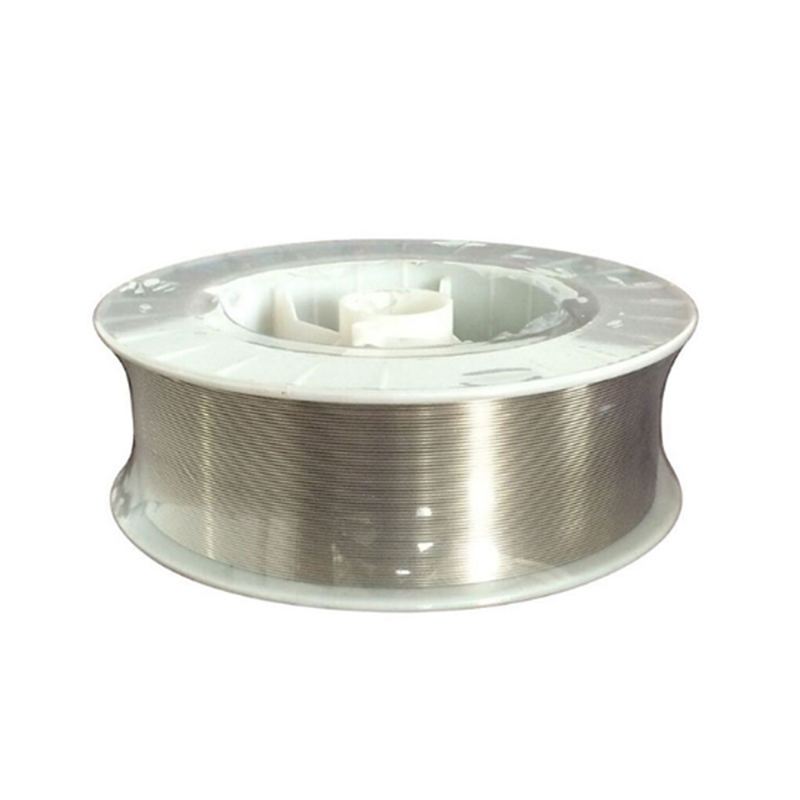
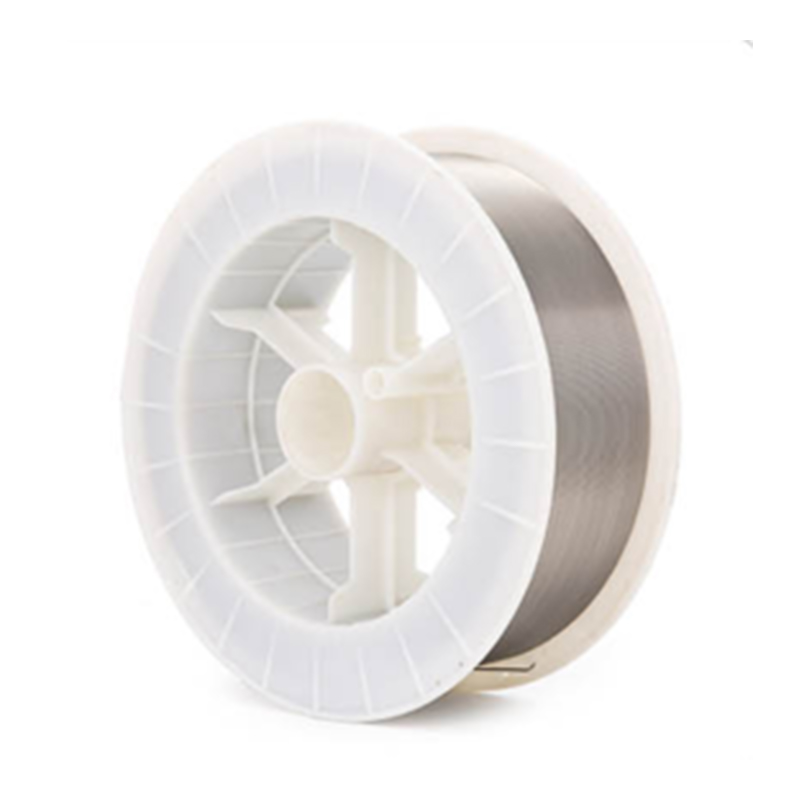
Welding wire is the consumable electrode fed continuously through a wire feed welder to create the weld joint. It is the single most important variable in gas metal arc welding, because the wire is both the filler metal and the electrical conductor that carries the arc. There are two dominant categories of welding wire used in wire feed welding today: solid MIG welding wire, which requires an external shielding gas, and flux core wire, which contains a powdered flux compound inside a hollow tube that produces its own shielding gas as it burns.
Both wire types are fed through the same basic welder setup - a wire spool, a drive roll system, a welding gun, and a welding cable that carries current from the machine to the work. What changes between the two is how the weld pool is protected from atmospheric contamination, and that single difference cascades into nearly every practical decision covered in this guide.
Solid MIG Wire in One Sentence
MIG welding wire is a bare, solid metal wire that must be paired with a shielding gas, typically a mix of argon and carbon dioxide for steel, to shield the molten weld pool from oxygen and nitrogen in the air.
Flux Core Wire in One Sentence
Flux core welding wire is a tubular wire filled with flux that decomposes in the arc, releasing its own shielding gas and slag layer, which means it can be run with no external gas supply at all in the self-shielded configuration.
A Short History of How These Two Wire Types Developed
Gas metal arc welding using solid MIG welding wire became commercially practical in the mid twentieth century once reliable constant-voltage power sources and wire feed systems were developed, allowing welders to move away from stick electrodes for high-production work. Flux core wire followed as an evolution of that same wire feed technology, borrowing the flux chemistry ideas from stick electrode coatings and packing them inside a hollow wire so that a machine could feed continuous self-shielded filler metal without a gas cylinder. Both processes now fall under the broader category of gas metal arc welding and flux cored arc welding, and most modern wire feed welders are built to run either type of welding wire with only minor setup changes.
Why This Comparison Still Matters Today
Even with decades of refinement, no single welding wire type has replaced the other, because the underlying trade-off between shielding gas control and self-shielded portability has never gone away. A fabrication shop with a controlled indoor environment gains little from flux core wire's wind resistance, while a mobile repair welder gains little from MIG wire's clean bead appearance if the job site has no room for a gas cylinder. Understanding this trade-off, rather than treating one wire type as universally better, is the fastest way to stop wasting money on the wrong consumable for a given job.
A Note on Terminology
Suppliers and welders sometimes use slightly different shorthand for the same products, which can be confusing when researching welding wire online. MIG welding wire is also referred to as GMAW wire or solid wire, flux core wire is also called FCAW wire or flux cored wire, and welding cable is sometimes labeled as welding lead or battery cable when sold for general power applications. Throughout this guide, the terms welding wire, flux core wire, and mig welding wire are used in the way most welding suppliers and forums use them, so the terminology should line up with what you encounter when shopping for wire and welding cable in person or online.
MIG Wire vs Flux Core Wire: Key Differences at a Glance
Before choosing between the two, it helps to see the core differences side by side. The table below compares the factors that matter most for everyday fabrication and repair work.
| Factor | MIG Welding Wire | Flux Core Wire |
| Shielding Method | External gas required | Self-shielded (no gas needed) |
| Best Environment | Indoor, wind-free | Outdoor, windy job sites |
| Spatter Level | Low | Higher, needs cleanup |
| Penetration on Thick Metal | Moderate | Deep |
| Slag Removal Needed | No | Yes |
| Portability | Lower (gas cylinder required) | Higher (no cylinder needed) |
| Typical Cost per Spool | Lower | Higher |
| Common Materials | Steel, stainless, aluminum | Mostly carbon steel |
Shielding Gas Types for MIG Welding Wire
Shielding gas selection is not a minor detail. It directly affects arc stability, penetration, spatter level, and whether a given MIG welding wire performs the way it is rated to. Different base materials call for very different gas blends, and using the wrong gas is one of the most common reasons a MIG weld looks porous or unstable even though the wire itself was correct.
| Gas Blend | Best Wire Pairing | Notes |
| 75 percent Argon, 25 percent CO2 | Er70s 6 welding wire, general steel | Most common all-purpose steel blend |
| 100 percent CO2 | Carbon steel MIG welding wire | Deeper penetration, more spatter |
| Tri-mix (Argon, Helium, CO2) | Stainless steel welding wire | Reduces oxidation, smoother bead |
| 100 percent Argon | Aluminum welding wire | Required for clean aluminum welds |
Flux core wire, by contrast, does not need this decision at all in its self-shielded form, which is one of the biggest simplifications it offers over MIG welding wire. Some flux core products, sometimes called dual-shield or gas-shielded flux core wire, do use an external gas alongside the internal flux for even deeper penetration on heavy structural work, but the self-shielded version remains the more common choice for field repair and general fabrication.
When MIG Welding Wire Is the Better Choice
MIG welding wire remains the default choice for shop environments where conditions are controlled and appearance matters. Because the shielding gas produces a stable, low-spatter arc, MIG wire is generally easier for beginners to learn and produces cleaner welds with less post-weld cleanup.
- Indoor fabrication. A shop with no significant airflow lets shielding gas stay in place around the weld pool without being blown away.
- Thin gauge material. MIG wire in smaller diameters, such as 0.023 inch to 0.030 inch, is well suited to auto body panels and light sheet metal down to about 24 gauge.
- Visible or cosmetic welds. Low spatter and a smoother bead mean less grinding and finishing work before paint or polish.
- Stainless steel and aluminum projects. Stainless steel welding wire and aluminum welding wire are both solid MIG-style wires that depend on precise gas coverage to avoid contamination and oxidation.
- High-volume production runs. Lower spatter and consistent arc characteristics reduce downtime on repetitive production welds.
ER70S-6 Welding Wire: The Standard Steel MIG Choice
Among solid MIG wires for carbon steel, er70s 6 welding wire is by far the most widely used classification in general fabrication, farm equipment repair, and light structural work. The "70" indicates a minimum tensile strength around 70,000 psi in the finished weld, and the "S-6" designation means the wire carries a higher silicon and manganese content than other ER70S variants, which helps it weld through light mill scale and surface rust without excessive porosity. For most general-purpose steel MIG welding, er70s 6 welding wire is the wire most welding suppliers will recommend by default.
Stainless Steel Welding Wire
Stainless welding wire, most commonly classified as ER308L or ER309L depending on the base metals being joined, is used for food equipment, exhaust systems, and corrosion-resistant fabrication. It requires a tri-mix or high-argon shielding gas blend rather than the straight CO2 or argon-CO2 mix used for carbon steel, because stainless is far more sensitive to atmospheric contamination during welding.
Aluminum Welding Wire
Aluminum welding wire, typically ER4043 or ER5356, requires pure argon shielding gas and a dedicated spool gun or push-pull gun setup in most cases, since aluminum wire is soft and tends to bird-nest in a standard steel-style drive system. Aluminum welding wire is exclusively a MIG-style solid wire product - there is no practical flux-cored equivalent for structural aluminum welding, which is one of the clearest examples of why shielding gas availability drives material choice.
When Flux Core Wire Is the Better Choice
Flux core welding wire earns its place in nearly every welder's toolbox because it solves the one major limitation of MIG wire: dependence on still air. Whenever a job takes place outdoors, in a garage with the door open, or on a site where dragging a gas cylinder is impractical, flux core wire becomes the more reliable option.
- Outdoor and windy conditions. Self-shielded flux core wire can be run in wind speeds that would blow away MIG shielding gas entirely, since the flux generates its own protective gas right at the arc.
- Thicker structural steel. Flux core wire generally runs at higher amperage and produces deeper penetration, making it a strong match for structural beams, trailers, and heavy equipment repair.
- Dirty, rusty, or painted material. The flux compound is more forgiving of surface contamination than bare MIG wire, which is useful for field repairs where grinding every surface clean is not realistic.
- Job sites without gas access. No cylinder means faster setup, easier transport, and one less consumable to manage on remote or mobile jobs.
- Farm, fence, and heavy fabrication work. Flux core wire's tolerance for less-than-ideal surface prep makes it a favorite for agricultural and general repair welding.
The Trade-Off: Slag and Spatter
The cost of flux core wire's self-shielding ability is a layer of slag that forms over every weld bead, which must be chipped and brushed away before painting or inspection. Flux core wire also tends to produce more spatter than gas-shielded MIG wire, meaning more cleanup time per joint, even though the underlying weld strength can be excellent when the correct wire and settings are used.
Aluminum Flux Core Wire: A Rare and Limited Option
Some welders ask about aluminum flux core wire hoping to avoid gas entirely on aluminum projects. In practice, aluminum flux core wire is extremely uncommon and not widely stocked by mainstream suppliers, because aluminum's low melting point and reactivity make a stable self-shielded flux formulation difficult to produce at a commercial scale. For nearly all real-world aluminum welding, solid aluminum welding wire run with pure argon gas remains the standard, reliable approach, and self-shielded aluminum products should be treated as a specialty item rather than a mainstream substitute.
Choosing the Right Welding Wire by Material
Material selection narrows the wire decision faster than almost any other factor. The table below summarizes the most common pairings between base metal and welding wire type.
| Base Material | Recommended Wire | Shielding |
| Mild Steel, General Fabrication | ER70S-6 welding wire | Argon and CO2 blend |
| Structural Steel, Thicker Sections | Flux core welding wire | Self-shielded, no gas |
| Stainless Steel Fabrication | Stainless steel welding wire (ER308L) | Tri-mix or high-argon blend |
| Aluminum Sheet and Structure | Aluminum welding wire (ER4043 or ER5356) | Pure argon |
| Outdoor Field Repair, Mixed Steel | Flux core wire | Self-shielded, no gas |
Notice that stainless welding wire and aluminum welding wire both sit firmly in the MIG category, since flux-cored options for these materials are either impractical or simply not commercially viable. This is a useful shortcut: if you are working with stainless or aluminum, the wire decision is effectively already made for you.
Matching Stainless Welding Wire to the Base Alloy
Not every stainless steel welding wire is interchangeable. ER308L is the standard choice for welding common 304 stainless, while ER309L is used when joining stainless to carbon steel because its higher chromium and nickel content helps bridge the difference in alloy composition. ER316L, which includes molybdenum, is reserved for higher corrosion resistance applications such as marine equipment or chemical processing components. Selecting the wrong stainless welding wire for the base alloy can lead to cracking or reduced corrosion resistance at the joint, even if the weld looks visually sound.
Why Flux Core Options for Stainless and Aluminum Remain Limited
Flux cored stainless wire does exist for certain heavy industrial applications, but it is far less common than solid stainless steel welding wire and is typically reserved for large-scale pipe and vessel fabrication rather than general shop use. Aluminum sits in an even narrower category, since aluminum flux core wire is rarely stocked and inconsistent in performance, reinforcing why solid aluminum welding wire with pure argon gas remains the practical standard for the overwhelming majority of aluminum welding jobs.
Welding Wire Diameter: Matching Size to Material Thickness
Wire diameter has a direct effect on amperage range, penetration depth, and how forgiving the wire is on thin material. Choosing too large a diameter for thin material tends to blow through the metal, while too small a diameter on thick material struggles to achieve adequate penetration.
| Wire Diameter | Typical Amperage Range | Best Suited Material Thickness |
| 0.023 inch | 30 to 90 amps | Thin sheet metal, auto body panels |
| 0.030 inch | 40 to 145 amps | General purpose, most common size |
| 0.035 inch | 60 to 190 amps | Medium gauge steel, light structural |
| 0.045 inch | 100 to 250 amps | Thicker steel, flux core structural work |
| 0.052 to 1/16 inch | 150 to 400 amps | Heavy structural, industrial flux core welding |
For most home shops and light fabrication work, 0.030 inch solid MIG wire or 0.030 to 0.035 inch flux core wire covers the widest range of projects without needing to swap spools constantly. Larger diameters become worthwhile once you are consistently welding material thicker than about 1/4 inch.
Welding Cable and Power Requirements for MIG and Flux Core
Wire selection is only half of the equation. The welding cable that carries current from the machine to the work clamp and gun has to be sized correctly for the amperage each process demands, and this is a step many welders overlook until they run into voltage drop and inconsistent arc performance.
Why Welding Cable Size Matters
Because flux core wire commonly runs at higher amperage than thin-wire MIG welding, the welding cable feeding the machine and the ground cable returning current to the work need to be sized generously enough to avoid excessive voltage drop over cable length. Undersized welding cable causes the machine to underperform its rated output, produces inconsistent arc characteristics, and can cause cables to overheat during extended duty cycles.
Understanding 2 0 Welding Cable
Welding cable is sized using the American Wire Gauge system, where a lower number means a larger conductor. 2 0 welding cable, commonly written as 2/0 AWG, is one of the most popular sizes for mid to heavy duty MIG and flux core setups because it comfortably handles 250 to 300 amp output over typical lead lengths found in most home and light industrial shops. As a general guideline, longer cable runs or higher sustained amperage call for a larger 2 0 welding cable or even heavier gauge, while shorter runs at lower amperage can use a smaller conductor without meaningful voltage loss.
| Cable Gauge | Max Recommended Amperage | Typical Use Case |
| 4 AWG | Up to 150 amps | Light duty MIG, short leads |
| 2 AWG | Up to 200 amps | General purpose shop welding |
| 1 0 AWG | Up to 250 amps | Mid duty flux core and MIG |
| 2 0 welding cable | Up to 300 amps | Heavy duty flux core, longer leads |
| 4 0 AWG | 350 amps and above | Industrial welding, extended cable runs |
If you regularly run flux core wire at higher amperage on thicker structural steel, upgrading to 2 0 welding cable rather than staying with a smaller gauge is one of the most cost-effective ways to improve arc stability and reduce heat buildup at the connections. Cheap, undersized welding cable is one of the least visible but most common reasons a properly rated welder still underperforms in the field, so treating cable gauge as part of the wire decision, rather than an afterthought, pays off in more consistent results.
Duty Cycle and Why It Matters for Wire Choice
Duty cycle describes how many minutes out of a ten minute period a welder can run at its rated amperage before it needs to cool down. Because flux core wire often runs at higher sustained amperage than thin-wire MIG welding, a machine with a modest duty cycle, such as 20 percent at 200 amps, will hit thermal shutdown faster when running heavy flux core passes than when running lighter MIG welding wire on thin material. Before committing to flux core wire for heavy structural work, check your machine's duty cycle rating at the amperage you plan to run, since undersized duty cycle is a common reason welders feel like their flux core setup is underperforming when the wire itself is not the problem.
Matching the Machine to the Wire Type
- Entry-level 120 volt machines generally handle thinner MIG welding wire and light flux core wire well, but struggle with the sustained amperage heavier flux core welding wire demands on thick material.
- 230 volt machines provide enough headroom for both processes across a wider range of material thickness, making them the more versatile choice if you plan to switch between MIG and flux core regularly.
- Multi-process machines that support MIG, flux core, and stick welding in one unit are worth the extra cost for anyone who moves between shop fabrication and outdoor field repair on a regular basis.
Input Power and Amperage Ceiling
The wall outlet feeding your welder also limits which wire type makes practical sense for heavier work. A standard 120 volt household circuit typically supports welders up to roughly 140 amps output, which is enough for most thin to medium gauge MIG welding wire work but leaves little headroom for high-amperage flux core welding wire on thick structural steel. Stepping up to a 230 volt circuit removes much of that ceiling, giving flux core wire the amperage range it needs to deliver the deep penetration it is chosen for in the first place. Before investing in heavier flux core wire and a larger welding cable setup, confirm your shop or job site power supply can actually support the amperage the wire and machine are rated for.
Cost Comparison: MIG Wire, Flux Core Wire, and Gas
Total cost of ownership between the two processes depends heavily on whether you already own a gas cylinder and how much welding you do outdoors. The wire spool itself is only part of the calculation.
| Cost Factor | MIG Welding Wire | Flux Core Wire |
| Spool Price (per pound, average) | Lower | Higher |
| Shielding Gas Cost | Ongoing rental and refill cost | None |
| Cleanup Labor (slag, spatter) | Minimal | Higher |
| Equipment Needed | Regulator, gas cylinder, gauge | None beyond the welder |
For occasional welders who mostly work indoors, the recurring cost of gas rental for MIG welding wire is usually manageable and worth it for the cleaner finish. For welders who split time between shop and field work, flux core wire often ends up being the more economical choice overall once gas rental and lost time changing setups are factored in.
Spool Sizes and Buying in Bulk
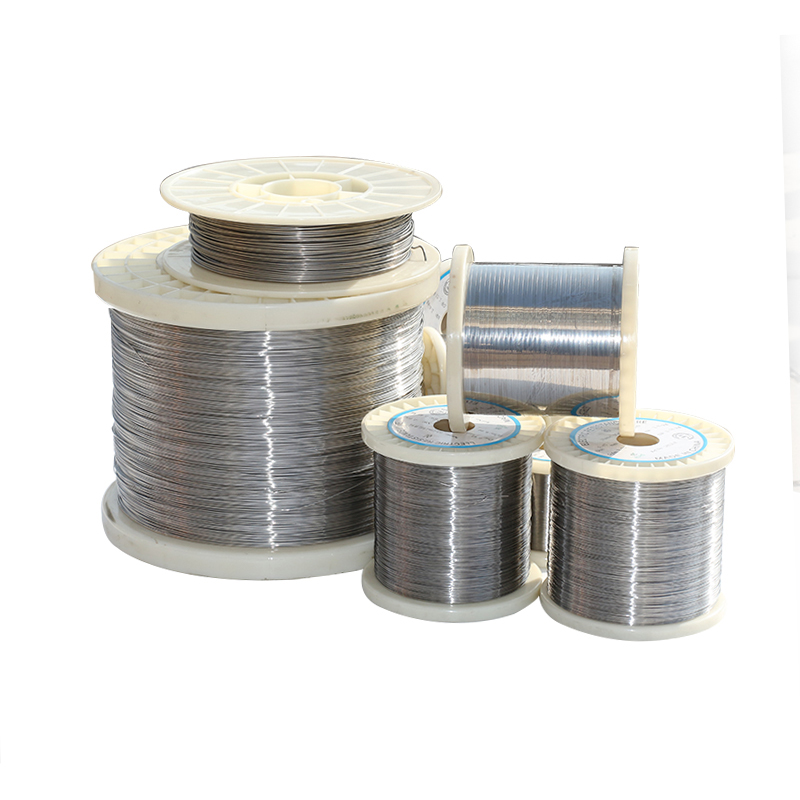
Welding wire is sold in a range of spool sizes, and choosing the right one affects both upfront cost and how often you need to interrupt a job to reload. Small 1 pound and 2 pound spools of MIG welding wire are common for hobbyists and occasional users, while 10 pound and 12 pound spools become more cost-effective per pound for anyone welding regularly. Flux core wire is frequently sold in 10 pound and 25 pound spools for the same reason, since larger spools reduce the per-pound price and the frequency of spool changes during longer projects.
| Spool Size | Best For | Cost Efficiency |
| 1 to 2 pounds | Occasional home use, testing a new wire | Lowest efficiency, highest per-pound cost |
| 10 pounds | Regular hobbyist and light shop use | Good balance of cost and convenience |
| 25 to 33 pounds | Production shops, frequent flux core welding wire use | Best per-pound pricing |
| 44 pounds and above | Industrial fabrication, continuous production runs | Lowest per-pound cost, requires spool gun compatibility |
Before buying a large spool of any welding wire, confirm your wire feeder can physically accommodate the spool size and hub diameter, since many entry-level machines are built only for 4 inch or 8 inch diameter spools and cannot mount the larger industrial sizes without an adapter.
Self-Shielded vs Dual-Shield Flux Core Wire
Not all flux core welding wire is identical in how it shields the weld pool. Self-shielded flux core wire, the type most commonly used for field repair and general fabrication, relies entirely on the internal flux to generate its own protective gas, making it the most portable option since no cylinder is required at all. Dual-shield flux core wire, sometimes labeled gas-shielded flux core wire, combines the internal flux with an external shielding gas, typically a CO2 or argon CO2 blend, to achieve deeper penetration and a smoother bead appearance than self-shielded wire alone, though it sacrifices the gas-free portability that makes flux core wire attractive for field work in the first place. Most hobbyist and light commercial users default to self-shielded flux core wire specifically because it preserves the no-gas advantage, while heavy industrial shops sometimes choose dual-shield flux core wire when weld appearance and penetration matter more than portability.
Wire Storage and Handling: Protecting Your Investment
Both MIG welding wire and flux core wire are sensitive to moisture, and improper storage is one of the most overlooked reasons welders experience porosity, poor feeding, or inconsistent arc performance even when the wire and gas selection were correct.
- Keep spools sealed when not in use. Moisture absorbed into flux core wire's internal flux compound can cause hydrogen-related porosity, while surface rust on solid MIG welding wire causes feeding problems and arc instability.
- Store spools in a dry, temperature-stable area. Humidity swings in an unheated garage or shed accelerate moisture absorption far more than a consistent, mildly humid environment.
- Use desiccant packs in long-term storage containers. This is especially important for stainless steel welding wire and aluminum welding wire, both of which are more sensitive to surface contamination than standard carbon steel wire.
- Avoid letting wire sit exposed inside the welder for extended idle periods. A welder stored in a damp shop can allow moisture to reach the wire even inside the machine's wire compartment.
- Inspect wire feeding smoothly before starting a critical job. Bird-nesting, excessive resistance, or a rough surface feel are all early warning signs that a spool has degraded and should be replaced before it causes a failed weld on an important joint.
Which Wire Do Professional Welders Prefer and Why
Ask a working fabricator which welding wire they prefer, and the honest answer is almost always "it depends on the job," rather than a single universal favorite. Professional shops that produce cosmetic or code-inspected welds on a fixed indoor line lean heavily on MIG welding wire, particularly er70s 6 welding wire for general steel, because consistency and appearance matter as much as strength. Mobile welding and heavy equipment repair professionals, on the other hand, frequently default to flux core wire simply because job sites rarely offer the still air a gas shielding process needs.
Many experienced welders keep both wire types loaded on separate machines, or keep a second spool gun ready, specifically so they are never limited by conditions on site. This dual setup mirrors the recommendation throughout this guide: the goal is not finding one winner between MIG welding wire and flux core wire, but matching the right wire to the environment and material in front of you on any given day. Over time, most welders develop an instinct for this decision without consciously thinking through every factor, but until that instinct develops, working through material, environment, amperage, and welding cable capacity in that order is a reliable way to land on the correct wire every time.
How to Switch Between MIG Wire and Flux Core Wire on the Same Machine
Many entry-level and mid-range wire feed welders are dual-purpose, meaning they can run either solid MIG welding wire with gas or self-shielded flux core wire, provided a few setup changes are made correctly.
-
1Check Polarity Requirements
Solid MIG wire typically runs on DCEP (electrode positive), while most self-shielded flux core wire runs on DCEN (electrode negative). Reversing the leads at the machine is required when switching wire types.
-
2Swap the Drive Roll if Needed
Flux core wire is softer and hollow, so many welders use a knurled drive roll for flux core and a smooth V-groove roll for solid MIG wire to avoid crushing or slipping.
-
3Remove or Connect the Gas Line
Disconnect and cap the gas line when running self-shielded flux core wire, and reconnect it when switching back to gas-shielded MIG welding wire.
-
4Adjust Voltage and Wire Speed
Flux core wire generally runs hotter for a given diameter than MIG wire, so voltage and wire feed speed settings need to be increased when switching over, following the chart printed inside most welder door panels.
-
5Update the Contact Tip
Match the contact tip size exactly to the new wire diameter, since a mismatched tip is one of the most common causes of poor wire feeding after switching wire types.
Technique Differences Between MIG Wire and Flux Core Wire
Beyond equipment setup, the actual welding technique shifts noticeably between the two processes, and understanding these differences helps explain why welders trained primarily on one wire type often need a short adjustment period when switching to the other.
Travel Angle and Gun Position
MIG welding wire generally performs best with a slight push angle, meaning the gun leads the weld pool by roughly 10 to 15 degrees, which helps the shielding gas fully envelop the arc and produces a flatter, cleaner bead profile. Flux core wire, by contrast, is typically run with a drag angle, where the gun trails behind the weld pool, allowing the slag to form properly behind the arc and helping achieve the deeper penetration flux core wire is known for.
Stick-Out Distance
Stick-out, or the length of wire extending beyond the contact tip before the arc, tends to run shorter for MIG welding wire, often around three eighths of an inch, to keep the shielding gas coverage tight around the arc. Flux core wire typically uses a longer stick-out, sometimes three quarters of an inch or more, which allows the flux core time to properly preheat and decompose before reaching the arc, improving both arc stability and shielding gas generation from the flux itself.
Weld Pool Visibility
Because flux core wire produces a slag layer and generally more smoke, weld pool visibility is often reduced compared to the cleaner arc of gas-shielded MIG welding wire. Welders accustomed to MIG work sometimes find they need to rely more on sound and arc feel than direct visual feedback when they first switch to flux core wire, particularly in tight or poorly lit work areas.
Multi-Pass Welding Considerations
On thicker material requiring multiple weld passes, flux core wire demands careful slag removal with a chipping hammer and wire brush between every single pass, since any trapped slag becomes a defect in the finished weld. MIG welding wire requires no such step between passes, which is one more reason MIG remains the faster overall process for multi-pass work when conditions allow it to be used. This time difference becomes especially noticeable on longer structural joints, where a welder running flux core wire may spend nearly as much time cleaning slag as actually welding, while the same joint run with gas-shielded MIG welding wire moves from pass to pass with almost no interruption.
Common Mistakes When Choosing Welding Wire
- Using MIG wire outdoors without a windscreen. Even light wind can blow shielding gas away from the weld pool, causing porosity that looks fine on the surface but weakens the joint underneath.
- Ignoring polarity when switching wire types. Running flux core wire on the wrong polarity produces excessive spatter and a weak, unstable arc.
- Undersizing the welding cable. A welder rated for 250 amps cannot deliver its full output through cable that is too thin for the amperage and lead length being used.
- Choosing the wrong diameter for the material. Running heavy 0.045 inch wire on thin 20 gauge sheet metal almost always results in burn-through.
- Skipping slag removal between flux core passes. Trapped slag between weld layers is a leading cause of inclusions and weld failure on multi-pass flux core joints.
- Assuming aluminum flux core wire is a drop-in gas-free substitute. Given how limited and inconsistent aluminum flux core wire is in practice, solid aluminum welding wire with argon gas remains the dependable choice for real aluminum fabrication work.
Safety Considerations for Each Welding Wire Type
Safety practices shift somewhat between MIG welding wire and flux core wire, largely due to differences in fume production, ventilation needs, and the equipment each process requires.
Fume Exposure
Flux core wire generally produces more visible smoke and fume than gas-shielded MIG welding wire, since the flux compound burns off as part of the shielding process. Adequate ventilation, or a fume extraction system for indoor flux core work, is more critical with flux core wire than with MIG wire, and welders should be especially cautious when running flux core wire in enclosed or poorly ventilated spaces.
Gas Cylinder Handling for MIG Welding
MIG welding wire setups introduce their own safety considerations centered on the compressed gas cylinder, including securing the cylinder upright with a chain or strap at all times, checking the regulator and hoses for leaks before each use, and never exposing a cylinder to excessive heat or direct sunlight for extended periods. A tipped or damaged gas cylinder can become a serious hazard, so proper storage and transport matter just as much as correct wire selection.
Electrical Safety and Welding Cable Condition
Regardless of whether you are running MIG welding wire or flux core wire, welding cable in poor condition, including cracked insulation or loose connections, presents a shock and fire hazard. Inspecting welding cable, particularly heavy gauge cable such as 2 0 welding cable carrying higher amperage, for damage before every significant job is a simple habit that prevents both equipment damage and personal injury.
Personal Protective Equipment
- Auto-darkening welding helmet rated for the amperage range you typically run, since flux core wire's brighter arc at higher amperage often calls for a higher shade setting than lower amperage MIG welding wire work.
- Flame-resistant gloves and jacket to protect against spatter, which tends to be more frequent with flux core wire than with gas-shielded MIG wire.
- Proper ventilation or a respirator rated for welding fume especially when running flux core wire indoors for extended periods.
- Hearing and eye protection appropriate for the grinding and slag chipping that typically follows flux core welding wire passes.